Master's · Research project
Predicting adverse radiation effects of stereotactic radiosurgery for brain metastases using radiomics and machine learning
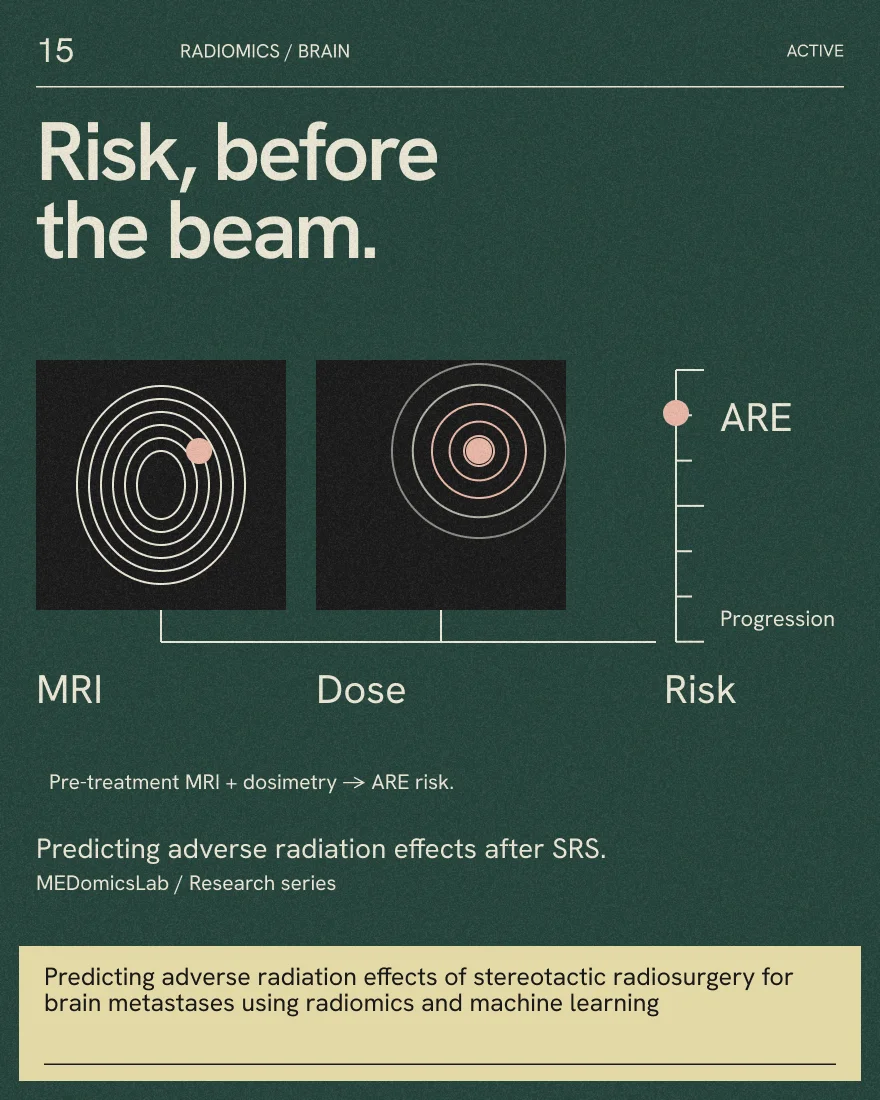
Simple radiomic model built from pre-treatment brain MRI and dosimetry maps to identify patients at high risk of adverse radiation effects after stereotactic radiosurgery.
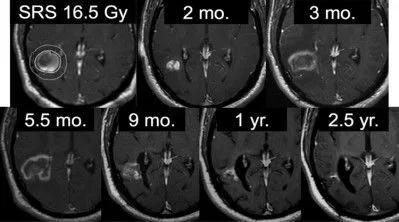
Figure from Sneed PK, Mendez J, Vemer-van den Hoek JGM, et al. Adverse radiation effect after stereotactic radiosurgery for brain metastases: incidence, time course, and risk factors. J Neurosurg. 2015;123(2):373-386. doi:10.3171/2014.10.JNS141610
Status
In progress (2024-today)
Type
Master's
Description
Stereotactic radiosurgery (SRS) can cause adverse radiation effects (ARE) that are difficult to distinguish from tumor progression, even though the two events require completely different therapeutic approaches. It is therefore particularly relevant to identify the patients at high risk of developing ARE. This project aims to build a simple and predictive radiomic model for ARE.
To do so, image features from the brain magnetic resonance imaging (MRI) acquired before SRS treatment, as well as features from the dosimetry maps, will be extracted with MEDiml, a software for radiomic computation and machine learning that follows the guidelines of the Image Biomarker Standardisation Initiative (IBSI). The features will then be reduced by identifying the optimal levels of radiomic complexity, and the best-performing and simplest model will be retained.
This project will help demonstrate that radiological images could be used to quantify risks in a non-invasive and personalized way.
Presentations
- Élodie presented this project at her first research seminar on March 25, 2026, at the Department of Medical Imaging and Radiation Sciences of the Université de Sherbrooke.
Status
Track
Master's
Researchers
 Associate Professor
 Elodie GillardCurrentMSc Radiation sciences and medical imaging
 Anthonin FalkTeam 2025Intern in AI / Imaging
- Martin LepageExternalUniversité de Sherbrooke
- David MathieuExternalUniversité de Sherbrooke